Why Choose Rehabilitation Robot Gloves for Your Business?

Time:2026-11-12 Author:Amelia
0%

Rehabilitation Robot Gloves are becoming a practical option for clinics, therapy providers, and businesses serving people with impaired hand movement. Their appeal is tangible: a glove can guide finger extension, support repeated grasp-and-release exercises, and record movement during a session. But useful technology is not automatically useful care.

The World Stroke Organization’s 2022 Global Stroke Fact Sheet estimates 12.2 million new strokes each year and 101 million people living with stroke worldwide. Many survivors need upper-limb rehabilitation, though needs and recovery paths differ. This points to a substantial care challenge—not a guaranteed market for every device. Businesses should assess patient fit, therapist training, cleaning routines, maintenance, and evidence of functional benefit before investing. A polished demonstration is not enough.

Professor Honghai Liu researches intelligent rehabilitation and human-machine interaction. A fair paraphrase of the human-centered principle reflected in this work—not a verbatim quotation—is: “Let the technology support therapy, while clinical judgment guides it.” That distinction matters. A glove may deliver consistent repetitions, yet still feel awkward on a stiff hand or take too long to set up. Ask for supervised trials, clear outcome measures, and honest feedback from therapists and users. Rehabilitation Robot Gloves can strengthen a service when they fit its patients and workflow. They cannot replace skilled assessment. And sometimes, the best business decision is to wait.
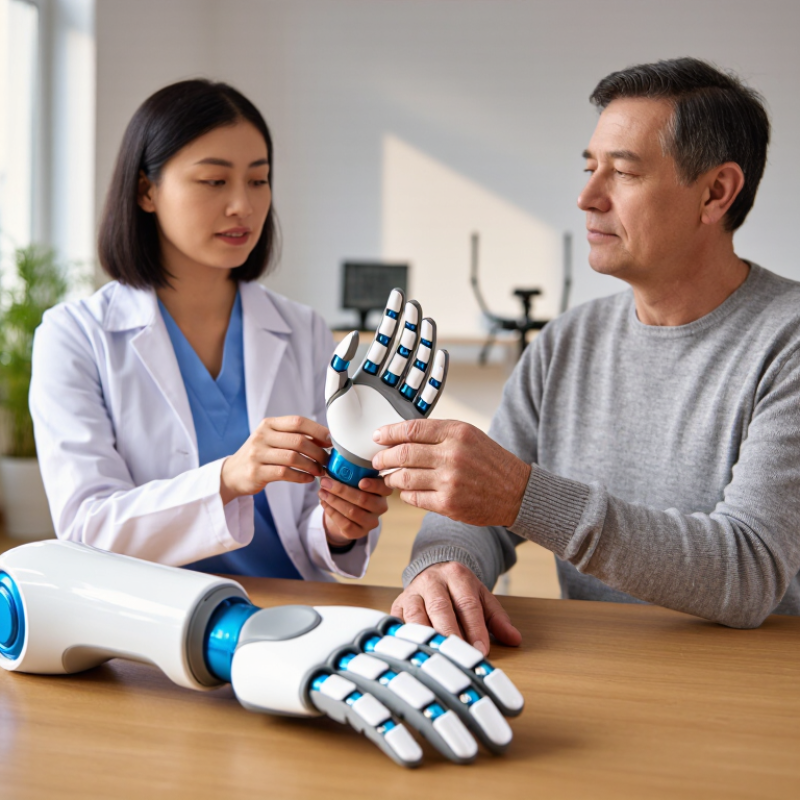
Why Choose Rehabilitation Robot Gloves for Your Business?

What Rehabilitation Robot Gloves Are and How They Work

Rehabilitation robot gloves are wearable devices that help a person practise hand and finger movements after injury or illness. Soft fabric or lightweight supports sit around the hand, while sensors detect movement or an attempt to move. Small motors, cables, or pneumatic parts can then provide gentle assistance. The exact design varies, so not every glove works in the same way.

During a session, a therapist may set the level of support and choose simple tasks, such as opening the hand or picking up a foam block. Sensors can record details like finger movement and repetition, giving the care team information to review. Small movements matter. A comfortable fit matters too. If a glove presses on a joint or restricts a finger, the session may need adjustment. Robot gloves support guided practice; they do not replace clinical assessment or hands-on care.

For a rehabilitation business, the practical work includes fitting, cleaning, staff training, and checking the device before use. The setup is not always smooth, especially when hand size or stiffness varies. That is worth considering. A trial with therapists and intended users can reveal whether the glove suits the clinic’s workflow and the movements its clients need to practise.

Key Components and Types of Rehabilitation Robot Gloves

A rehabilitation robot glove is more than a motor wrapped in fabric. Its main parts include a hand-supporting textile or frame, actuators, sensors, a controller, and therapist-facing software. Actuators provide assistance through cables, tendons, or pneumatic chambers. Sensors can track finger angle, grip force, or movement repetitions. The controller adjusts assistance, while the software helps clinicians review sessions. Small details matter: a pressure point across a knuckle can make a glove uncomfortable before a session ends.

Designs generally fall into rigid exoskeleton, cable-driven, and soft pneumatic types. Rigid frames guide individual joints but may feel bulky. Cable systems pull fingers through routed tendons and can leave the palm relatively open. Soft gloves use flexible chambers to support bending, though their force control may be less precise. The World Health Organization reported that about 2.4 billion people could benefit from rehabilitation. The World Stroke Organization’s 2022 fact sheet estimated 12.2 million new strokes each year, many involving arm or hand impairment. These figures suggest a substantial need, but they do not prove every clinic needs the same device. Fit, cleaning time, adjustment range, and staff training deserve hands-on testing. A neat specification sheet can miss the awkward part: real hands vary.

Why Choose Rehabilitation Robot Gloves for Your Business? — Key Components and Types of Rehabilitation Robot Gloves
Glove Type How It Works Key Components Typical Rehabilitation Use Business Considerations
Passive hand support glove Uses elastic elements or mechanical linkages to assist finger opening or support hand positioning without powered movement. Glove or hand interface, elastic bands or springs, adjustable straps, finger guides. Positioning support and basic assisted movement, depending on the device design and the user’s needs. Generally has a simpler mechanical design. Check fit, donning time, cleaning requirements, and whether assistance can be adjusted for different users.
Soft pneumatic glove Air pressure inflates flexible actuators to help move selected fingers. Some designs assist opening, closing, or both. Flexible pneumatic actuators, tubing, air pump or compressor, valves, controller, hand interface. Task-oriented practice for finger movement and grasp-and-release activities, when appropriate to the therapy plan. Evaluate pump noise, tubing management, setup time, actuator durability, and the space needed for the air supply and controls.
Tendon-driven glove Small motors pull cables or tendons routed along the fingers to provide assisted movement. Motors, tendons or cables, cable guides, controller, sensors, battery or power supply, glove interface. Assisted finger flexion or extension and repeated hand-movement practice, depending on the system’s configuration. Review cable routing, maintenance access, battery arrangements, movement settings, and how the system accommodates different hand sizes.
Rigid or linkage-based glove Mechanical links or articulated structures guide finger movement and transmit assistance from a powered or manual mechanism. Finger linkages, joints, mounting structure, actuators where applicable, adjustment points, hand interface. Structured movement assistance where alignment and controlled joint motion are important to the intended therapy. Confirm that adjustments support safe alignment, and assess device weight, comfort, fitting time, and compatibility with clinical workflows.
Sensor-guided interactive glove Hand or motion sensors detect user movement or effort; software may adapt assistance or provide visual or game-based feedback. Motion or force sensors, controller, software interface, display or computer, glove interface, optional actuators. Repetitive practice with feedback and movement tracking, when these functions match the rehabilitation program. Consider staff training, data handling, software support, accessibility, and whether reported measures suit the organization’s documentation needs.
Key selection factors Choose a device based on the intended users, therapy tasks, level of assistance, and operating environment rather than the product category alone. Fit and adjustability, assistance settings, controls, sensors, power source, cleaning guidance, service documentation. May support rehabilitation programs in clinics, hospitals, or other supervised care settings; suitability depends on clinical assessment and device instructions. Compare staff setup requirements, training, maintenance, consumables, technical support, safety documentation, and total operating needs.

Business Settings That Use Rehabilitation Robot Gloves

Rehabilitation robot gloves can fit several business settings, but each needs a different workflow.

In outpatient clinics, therapists may use them during scheduled hand sessions after a stroke or injury. A glove can guide repeated finger opening and closing while staff track comfort, range, and task completion. Keep the device near adjustable chairs, sanitizing supplies, and a clear table. Small details matter. A crowded room can turn setup into wasted treatment time.

Rehabilitation hospitals may use gloves within broader occupational therapy programs, where patients have varied strength and fatigue. Skilled nursing and senior-care centers may consider them for supervised practice, provided staff can check fit and skin regularly. Home-care providers can use portable systems during visits, though transport, charging, and caregiver training add work. University labs and therapy-training centers may use gloves to demonstrate assisted movement or collect structured observations. Not every setting needs automation; some workflows may feel awkward at first.

Tips: Match the glove’s assistance modes to patient needs and staff skills. Ask about practical training, cleaning instructions, maintenance, and safety limits. Trial it in a real session, not only a demonstration. Record setup time and patient feedback. If the glove causes pressure or discomfort, stop and reassess with a qualified clinician.

Operational and Patient-Care Benefits for Businesses

Rehabilitation robot gloves can help therapy businesses deliver repeatable hand exercises while therapists manage busy schedules. A glove may guide finger opening, grasping, and release through adjustable assistance during a session. Staff can record session duration, repetitions, and assistance settings, making progress easier to review across visits. That record can support conversations between clinicians and patients, but it does not replace clinical judgment. Setup still matters. Correct sizing, skin checks, and clear cleaning procedures support comfort and help prevent avoidable interruptions.

Patients may value guided practice that lets them work on specific movements at a measured pace. For example, someone practicing a grasp can handle a soft foam block while a therapist observes finger motion and adjusts support. The device should fit the person’s goals, ability, and tolerance; more assistance is not always better. Training takes time. Businesses should plan for staff onboarding, equipment checks, and session time for fitting, rather than treating the glove as plug-and-play. Early sessions may feel awkward, and some patients may prefer simpler exercises. That feedback is useful, not a failure. Regular review helps teams decide whether the tool is practical for their workflow and meaningful for each patient.

Factors to Evaluate Before Choosing Rehabilitation Robot Gloves

Why Choose Rehabilitation Robot Gloves for Your Business?

Factors to Evaluate Before Choosing Rehabilitation Robot Gloves

Choosing rehabilitation robot gloves requires more than comparing assistance modes. Start with the people who will use them: patients with different hand sizes, strength levels, and therapy goals. Check whether the glove supports the movements your clinicians actually train, such as finger opening and grasping. Fit matters. A poorly adjusted glove can cause discomfort or discourage regular use. Ask for clear guidance on setup, cleaning, and staff training before committing.

Tips: During a hands-on trial, check how quickly staff can fit the glove and adjust its settings. Watch for pressure points, delayed responses, or confusing controls. Record feedback from both patients and therapists. Small frustrations count.

Evaluate evidence carefully. Ask what outcome measures are available, how the device records sessions, and whether those records fit your existing workflow. A dashboard is useful only if staff can interpret it and act on it. Also review maintenance needs, replacement parts, warranty terms, and technical support response times. These details affect costs beyond the purchase price. No device suits every clinic; even a promising trial may reveal awkward routines or unmet needs. Compare trial results with your service goals, and involve clinicians in the decision.

FAQS

What are rehabilitation robot gloves?

They are wearable devices that support hand and finger practice after injury or illness. Sensors detect movement, while motors, cables, or air-powered parts may assist. Small movements matter.

How does a glove support hand exercises?

A therapist may set assistance for tasks such as opening the hand or grasping a soft foam block. The glove can record movement, repetitions, and assistance settings.

Do robot gloves replace a therapist?

No. They support guided practice but do not replace clinical assessment or hands-on care. A qualified clinician should adjust the session when needed.

Which care settings may use these gloves?

Outpatient clinics, rehabilitation hospitals, senior-care centers, and home-care providers may consider them. Training centers and university labs may also use them for demonstrations or structured observations.

What should staff check before a session?

Check the glove’s fit, the person’s comfort, and the device’s condition. Keep cleaning supplies nearby, and make sure the table and chair allow safe movement. Fit matters.

What practical work comes with using a glove?

Staff may need training, fitting time, cleaning procedures, charging, and maintenance checks. Transport can add work during home visits. The first setup can feel clumsy.

How can a business tell if a glove suits its workflow?

Trial it during a real therapy session, not only a demonstration. Record setup time, patient feedback, and task completion. A tidy demo may hide awkward steps.

What if a patient feels pressure or fatigue?

Stop and reassess the fit and assistance with a qualified clinician. Check the skin regularly, especially around joints. More assistance is not always better.

Conclusion

Rehabilitation Robot Gloves are wearable assistive devices designed to support hand and finger movement during therapy and functional practice. Depending on their design, they may use soft materials, sensors, and powered or guided mechanisms to help users perform repeated movements and provide feedback. Different models can focus on finger mobility, grip practice, or adaptable assistance, making it important to understand how each system works and what level of support it offers.

For rehabilitation clinics, hospitals, care facilities, and therapy practices, these gloves may help organize training, encourage consistent practice, and support staff in monitoring progress. Before choosing a system, businesses should consider the needs and abilities of the people they serve, comfort and fit, ease of use, cleaning and maintenance requirements, staff training, available support, and overall cost. A careful evaluation helps determine whether a glove can fit into existing workflows and contribute meaningfully to patient care.

Amelia

Amelia

Amelia is a seasoned marketing professional with a wealth of expertise in our company’s core offerings. With an unwavering passion for driving growth and innovation, she plays a pivotal role in shaping our marketing strategies and enhancing brand visibility. A key aspect of her responsibilities......