Choosing the right Scoliosis Screening Posture System is crucial for early detection. Dr. Emily Carter, a leading expert in the field, emphasizes, “The right system can transform how we monitor patients.” Her insights guide many in making informed choices.
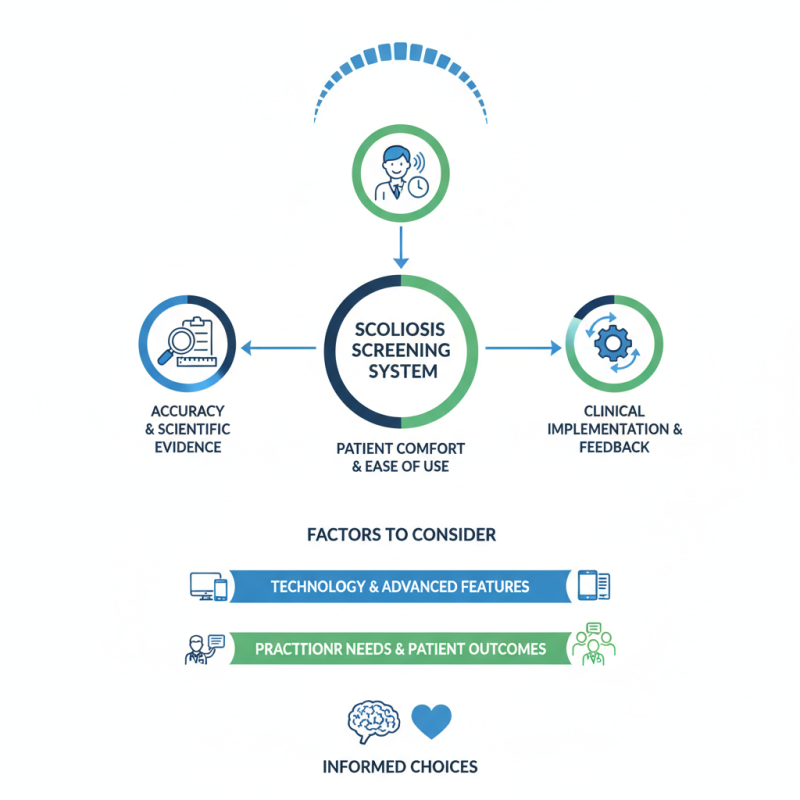
An effective Scoliosis Screening Posture System should consider various factors. Accuracy, ease of use, and patient comfort play significant roles. Different systems offer unique features, and comparing them is essential. Some systems may be more advanced, while others are easier to implement in clinical settings.
Selecting a system is not just about the latest technology. Practitioners need to reflect on their specific needs. A system could excel in one area but fall short in another. Continuous assessment and feedback from users can uncover these gaps. Prioritizing both scientific evidence and practical experience ensures better outcomes for patients.
Scoliosis is a condition that affects the spine's curvature. This abnormal curve can lead to various health issues, including pain and mobility restrictions. According to the National Scoliosis Foundation, approximately 3% of the population will develop scoliosis, which can progress with age. It often starts in childhood or adolescence, making early detection crucial.
The impact on health can be significant. Patients with untreated scoliosis may experience chronic pain. A study published in the Journal of Orthopedic Research noted that around 68% of adults with scoliosis reported back pain. Respiratory function may also decline if the curve is severe, constraining the lungs. Monitoring these factors is essential for quality of life.
While screening for scoliosis is vital, it is important to approach it thoughtfully. Different testing postures can influence the findings. Some methods may not capture subtle curves effectively. Therefore, a screening system should prioritize accuracy. Health professionals need to be aware of these limitations and choose screening tools that reflect this understanding. Regular evaluations can provide clearer insights into a patient's condition as they grow.
| Feature | Description | Importance |
|---|---|---|
| User-Friendliness | System should be easy to operate for both practitioners and patients. | High |
| Accuracy | Ability to provide precise measurements of spinal curvature. | Critical |
| Portability | Ease of transport for use in various locations. | Medium |
| Cost | Affordability and value for the features offered. | High |
| Software Integration | Compatibility with existing health software for record-keeping. | Medium |
| Durability | Resistance to wear and tear for long-term use. | High |
When choosing a scoliosis screening posture system, it is essential to focus on key features that ensure accuracy and reliability. Look for a system that utilizes advanced imaging technology. This enhances the precision of measurements, providing clearer insights into spinal alignment. Additionally, consider the ease of use. A user-friendly interface allows for efficient screenings, making it accessible for both professionals and patients.
Another vital aspect is the system's adaptability. A good posture screening system should accommodate various body types and provide customizable settings. This flexibility ensures that it meets the needs of diverse populations. Furthermore, reliable data storage and reporting features are important. They enable practitioners to track progress over time and share results with patients easily.
Incorporating real-time feedback can also be beneficial. This feature helps users correct postural issues during the screening. However, it’s crucial to choose a system that balances high-tech functionalities with practical application. Overly complicated systems can lead to confusion or errors. Reflecting on user experiences and feedback can greatly enhance the selection process. Prioritizing these elements can lead to better outcomes in scoliosis screening and treatment.
Scoliosis screening posture systems play a vital role in early detection and intervention. According to the National Scoliosis Foundation, about 2-3% of adolescents are affected by scoliosis. Early screening can lead to better outcomes. Evaluating various systems is crucial for effective identification and management.
Different screening systems range from visual assessments to advanced digital imaging. Visual assessments rely on trained professionals observing posture. This method is quick and cost-effective but may lack precision. Digital systems, on the other hand, utilize sensors and software for more accurate measurements. A study published in the Spine Journal found that digital methods improve detection rates by 15% compared to visual assessments.
Consideration of usability is essential. Some systems are portable, allowing for screening in schools or clinics. Others require specialized facilities. The choice of system should involve the intended environment and target population. Reflecting on these options reveals that while digital systems offer accuracy, they often require significant investments. Balancing accuracy with accessibility is a complex challenge that demands careful thought.
When evaluating scoliosis screening posture systems, accuracy and effectiveness become crucial. A recent study highlighted that traditional methods often miss up to
30% of mild scoliosis cases. This raises questions about the reliability of common screening techniques. The American Academy of Orthopedic Surgeons recommends continuous advancements in screening technology to improve detection rates.
Key metrics for assessing these systems include sensitivity and specificity. Recent data indicates that some popular systems have a sensitivity as low as
70% for mild scoliosis detection. This inadequacy can lead to delayed treatment and potential complications. When examining various systems, the thoroughness of both visual assessments and technology integration matters significantly.
Moreover, the ease of use and comfort level of the screening process can influence patient compliance. Systems that require minimal patient movement often yield better outcomes. Yet, simplicity can sometimes compromise precision. Testing multiple systems across different demographics is vital to identify the most effective ones.
Emphasis should also be placed on continuous education for practitioners to ensure they fully understand each system's strengths and weaknesses.
Choosing the right scoliosis screening posture system can significantly impact patient outcomes. When assessing different systems, prioritize those that offer comprehensive analysis capabilities. According to a study by the Scoliosis Research Society, effective screenings can improve early diagnosis rates by up to 70%. A system that allows for detailed evaluations and real-time feedback is crucial for accurate assessments.
Consider the training requirements for staff using these systems. A report from the American Association of Orthopaedic Surgeons emphasizes that adequate training can reduce errors in interpretation. Systems that offer accessible user interfaces and straightforward operation tend to yield better results. On the other hand, complex systems can lead to confusion and misdiagnosis.
Another important factor is the adaptability of the technology. Systems must accommodate various patient demographics. According to data from the National Institutes of Health, scoliosis can occur across all age groups. Therefore, flexibility in measurements and analysis is essential. Some systems may lack customizable features, limiting their effectiveness in diverse clinical situations. In that light, reflect on which features align best with your clinical needs.
: Scoliosis is a condition that alters the spine's natural curvature. It can cause pain and restrict mobility.
Approximately 3% of people develop scoliosis, often beginning in childhood or adolescence.
Untreated scoliosis can lead to chronic pain and decreased respiratory function due to severe curves.
Early detection can improve outcomes significantly, potentially reducing complications related to the condition.
There are visual assessments and advanced digital imaging systems, each with different levels of accuracy and usability.
Digital methods improve detection rates by about 15% compared to visual assessments.
Consider accuracy, usability, staff training, and the adaptability of technology to different demographics.
Adequate training can reduce errors and improve the accuracy of scoliosis assessments.
Balancing accuracy with accessibility is challenging, especially for systems requiring significant investments.
Reflect on the system's features and how they align with clinical needs to improve patient outcomes.
This article provides an insightful overview of the essential factors to consider when selecting the best Scoliosis Screening Posture System. It begins by explaining scoliosis and its potential implications for overall health, emphasizing the importance of early detection. Key features of effective screening systems, such as ease of use, accuracy, and reliability, are discussed to guide readers in their decision-making process.
Furthermore, the article evaluates various types of scoliosis screening posture systems and compares the effectiveness and accuracy of the most popular options available. By synthesizing this information, it offers valuable recommendations tailored to individual needs, ensuring that those seeking a reliable scoliosis screening posture system can make informed choices for optimal health outcomes.

MedTrack