Choosing a Clinical Foot Assessment System in 2026 requires more than comparing scanners, cameras, or software dashboards. The right platform must support sound clinical reasoning, repeatable measurements, and clear patient communication. A crowded clinic may need rapid screening, while a biomechanics laboratory may require detailed plantar-pressure data. These are different priorities.
Professor Chris Nester, a respected clinical biomechanics researcher, has stated: “The foot does not work in isolation.” This principle should guide every purchasing decision. A reliable system should connect foot posture, gait, pressure distribution, footwear, and wider lower-limb function. It should not reduce a patient to one colorful heat map.
Look closely at everyday use. Can clinicians position a patient consistently? Can the system capture walking, standing, and repeated trials? Are measurements easy to explain beside a treatment chair? Check calibration procedures, reporting tools, data security, training, and technical support. Evidence matters more than impressive demonstrations. Ask whether published research supports the system’s measurements and clinical applications.
No device replaces professional judgment. None.
A useful assessment system should improve decisions, not simply produce more data. This distinction is easy to miss during a sales presentation. I would also question systems promising perfect objectivity. Human movement varies with fatigue, footwear, pain, and mood. That variability is clinically meaningful, although it can complicate comparisons.
This guide examines the practical criteria, evidence standards, workflow demands, and hidden costs that should shape your 2026 choice. The best system may not be the most advanced. It may be the one your team can use consistently, interpret responsibly, and trust over time.
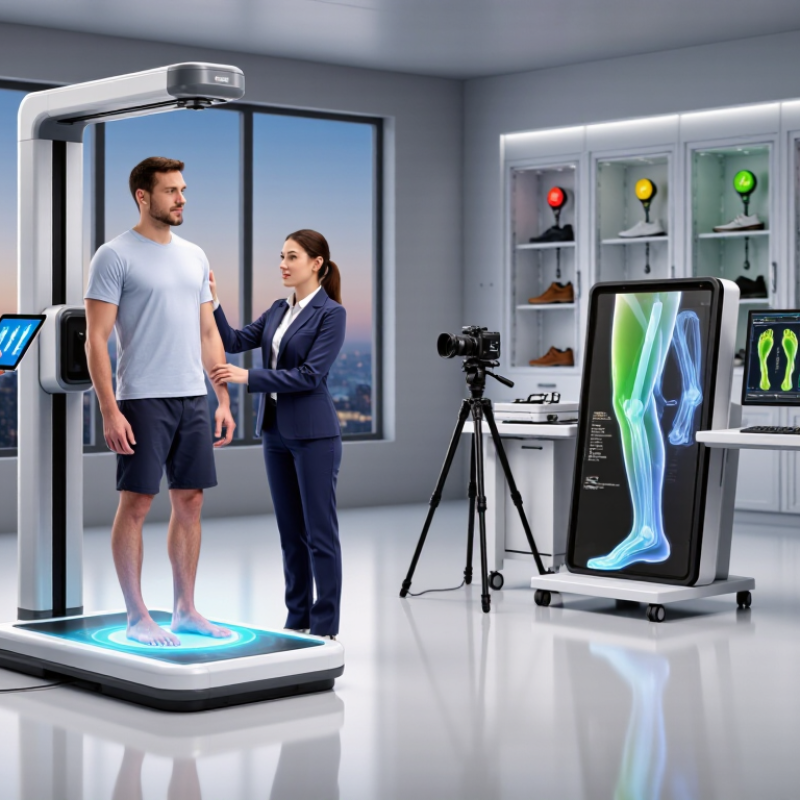
Choosing a clinical foot assessment system in 2026 should begin with a clear clinical question. Are you tracking diabetic foot risk, gait changes, pressure distribution, or rehabilitation progress? Each goal demands different measurements, timing, and reporting.
Define the patient population before comparing equipment. A system for older adults may need large displays, simple instructions, and stable support rails. Children may require adjustable surfaces and shorter testing sessions.
Patients with neuropathy, wounds, balance problems, or limited mobility need careful protocols. Safety comes first.
In daily practice, a useful system should fit the examination room and existing workflow. Clinicians need reliable readings, repeatable positioning, and reports that support decisions. Ask whether staff can learn the process quickly. Ask again after a busy clinic day.
A polished interface cannot repair poor test design. Our first choice may still prove unsuitable when patients tire, move unpredictably, or misunderstand instructions. That weakness deserves documentation, not concealment.
Check measurement accuracy, data security, calibration procedures, and published validation evidence. Include patients in the review. Their comfort, privacy, and ability to complete the assessment can change the result. A technically advanced system is not automatically clinically appropriate.
Clinical foot assessment now combines several measurement methods. Manual screening remains useful. A monofilament test checks protective sensation, while a tuning fork can support vibration assessment. These tools are inexpensive and portable. However, results depend heavily on examiner technique.
Pressure platforms measure plantar loading during standing or walking. They can reveal high-pressure zones beneath the metatarsal heads or heel. Three-dimensional scanners capture foot shape, volume, and alignment. Motion analysis systems add information about stride timing and joint movement.
The International Working Group on the Diabetic Foot recommends risk-based foot screening, making repeatable measurements increasingly important. The IDF Diabetes Atlas, 10th edition, estimated 537 million adults were living with diabetes in 2021. That scale makes reliable screening difficult to ignore.
Do not confuse more data with better care. A high-resolution scan may look impressive but offer limited value without clinical interpretation. Pressure readings can also change with footwear, walking speed, surface hardness, and sensor calibration. Choose systems that report repeatability, measurement limits, and calibration procedures. Ask whether different clinicians obtain similar results. That question matters.
Real clinics face interruptions. Patients move. Sensors drift. Records may be incomplete. Therefore, the best system may not be the most advanced one. It should fit appointment time, staff training, infection-control procedures, and follow-up needs. Combining simple sensory tests with pressure or shape data can provide stronger evidence than relying on one technology alone.
Choosing a clinical foot assessment system in 2026 starts with workflow fit, not impressive features. WHO reported that 830 million adults were living with diabetes in 2022. Many may need repeated foot checks. The system should support screening, photography, risk grading, referral, and follow-up without duplicate entry. A nurse should complete a basic assessment during a normal consultation. If documentation requires a second workstation, adoption will weaken.
Usability needs observation, not assumptions. Test the system with nurses, podiatrists, and reception staff during busy clinics. Measure clicks, completion time, correction rates, and missed fields. AHRQ’s 2022 Surveys on Patient Safety Culture database reported 82% positive responses for teamwork within units, but only 48% for handoffs and information exchange. Poor data transfer remains a practical risk. Staff training should use short, role-based sessions. Include a real patient scenario, a damaged skin image, and an urgent referral pathway. Then repeat the exercise after two weeks. Short sessions work better.
Do not overtrust the first pilot. Experienced staff may hide confusing steps because they understand clinical shortcuts. New staff often expose them. Record their hesitation. A system that produces elegant reports but slows triage is not clinically efficient. Review access controls, audit trails, image quality, and local escalation rules with clinical governance staff. Train one super-user per shift, but keep written backup procedures for absence, outages, and rushed clinics.
How to Choose a Clinical Foot Assessment System in 2026?
A clinical foot assessment system should produce reliable measurements, not merely attractive reports. During evaluation, ask how it handles lighting, camera angle, skin tone, movement, and incomplete scans. Test it with real patients, including people with swelling, ulcers, limited mobility, or unusual foot shapes. Compare digital results with trained clinician assessments and documented measurements. Small differences can change risk classification. That matters.
Tips: Request a validation report, sample audit logs, and a clear explanation of measurement accuracy. Check whether staff can correct an obvious error without hiding the original record. Review data export formats before signing a contract. A system that cannot share structured data may create another isolated database.
Integration should fit the clinic’s daily workflow. Confirm compatibility with electronic health records, imaging tools, appointment systems, and secure identity controls. Privacy checks must cover encryption, user permissions, retention periods, backups, and breach procedures. Ask where data is stored and whether subcontractors can access it. Compliance is not a checkbox; it needs evidence, training, and regular review. Requirements may differ across regions, so obtain qualified legal and clinical advice. Rushed demonstrations reveal little. A supervised pilot often exposes duplicate records, slow screens, or confusing alerts. Leave room for those inconvenient findings.
Use these reference areas to structure your evaluation: verify measurement quality, interoperability, privacy safeguards, and compliance evidence. The values represent the number of top-level areas in each established framework, not vendor scores.
Choosing a clinical foot assessment system in 2026 requires more than comparing purchase prices. Calculate the total cost across five years. Include hardware, software access, staff training, calibration, repairs, and data storage. A low initial quote can become expensive after installation. Ask for written pricing assumptions.
In clinic planning, measure the full workflow. How many patients can one assessment station handle hourly? How long does setup take? Can clinicians export reports into existing records without duplicate entry? A system that saves six minutes per patient may recover its cost faster than a cheaper system with manual reporting. Check the cost of updates, technical support, replacement sensors, and staff turnover. These details often disappear during sales demonstrations.
Scalability needs evidence, not optimistic promises. Test the system with current patient volume and a realistic three-year increase. Confirm whether additional rooms, users, and locations can be added without rebuilding the process. Require role-based access, reliable backups, clear audit trails, and appropriate privacy controls. Clinical measurements also need consistent calibration and documented operating procedures. My first budget underestimated training time. That mistake delayed adoption. Leave room for refresher sessions and workflow changes. A pilot with real clinicians can expose hidden costs, awkward positioning, or reports that look impressive but provide limited clinical value. Ask staff to record every extra step. Small friction becomes a large expense.
| Assessment System Type | Typical Clinical Use | Initial Hardware Cost (USD) |
Software / License per Year (USD) |
Training & Setup (USD) |
Annual Maintenance (USD) |
Expected Service Life (Years) |
Average Assessment Time |
Estimated 5-Year TCO (USD) |
Scalability Consideration |
|---|---|---|---|---|---|---|---|---|---|
| Clinical Foot Pressure Mat | Routine plantar-pressure screening, diabetic-foot risk reviews, orthotic follow-up | 8,000–20,000 | 0–3,000 | 1,000–3,000 | 800–2,000 | 5–7 | 10–20 min | 18,000–45,000 | Good entry point; confirm data export, calibration support, and multi-user access before expanding. |
| Portable In-Shoe Pressure System | Walking assessment inside footwear, workplace or community screening, treatment verification | 15,000–35,000 | 1,000–5,000 | 2,000–5,000 | 1,500–4,000 | 4–6 | 20–35 min | 35,000–75,000 | Scales well across rooms and sites; budget for sensor replacement, charging, cleaning, and patient-size coverage. |
| 3D Foot Scanner | Foot shape measurement, orthotic design, footwear fitting, baseline documentation | 10,000–30,000 | 1,000–6,000 | 1,000–4,000 | 1,000–3,000 | 5–7 | 8–15 min | 22,000–60,000 | Prioritize open file formats, automated measurements, cloud access controls, and compatibility with design workflows. |
| Pressure Platform with Video | Dynamic gait analysis, rehabilitation monitoring, sports and musculoskeletal assessment | 30,000–75,000 | 2,000–8,000 | 3,000–8,000 | 3,000–7,000 | 7–10 | 30–50 min | 60,000–140,000 | Suitable for higher-volume clinics; verify room requirements, camera synchronization, network capacity, and reporting automation. |
| Integrated 3D Motion and Gait Lab | Complex gait disorders, research, pre/post-surgical analysis, multidisciplinary evaluation | 100,000–250,000 | 8,000–25,000 | 10,000–30,000 | 10,000–25,000 | 8–12 | 60–120 min | 250,000–600,000 | Highest capability and cost; plan for dedicated space, specialist staff, cybersecurity, service contracts, and integration with clinical records. |
Manual screening remains useful for protective sensation and vibration. Pressure platforms show plantar loading. Three-dimensional scanners measure shape and alignment. Motion analysis adds stride and joint information. Combining methods can provide stronger evidence than using one tool alone.
Not necessarily. A high-resolution scan may look impressive but add little clinical value. Interpretation still matters. More data is not automatically better care. This is easy to forget.
Footwear, walking speed, surface hardness, and sensor calibration can affect readings. Patients may also move during testing. Ask for repeatability data and documented calibration procedures. Test whether different clinicians obtain similar results.
A nurse should complete a basic assessment during a normal consultation. The system should support screening, photography, risk grading, referrals, and follow-up. Avoid duplicate entry. A second workstation may weaken adoption.
Use short, role-based training sessions. Include a real patient scenario, a damaged-skin image, and an urgent referral pathway. Repeat the exercise after two weeks. Train one super-user per shift. Keep written backup procedures.
Test the system with nurses, podiatrists, reception staff, and new users. Record clicks, completion time, correction rates, hesitation, and missed fields. Experienced staff may hide confusing steps. New staff may reveal them.
Test lighting, camera angle, skin tone, movement, swelling, ulcers, limited mobility, and unusual foot shapes. Compare digital findings with trained clinician assessments. Request validation reports and sample audit logs. Small differences can change risk classification.
Confirm compatibility with electronic records, imaging tools, appointment systems, and secure identity controls. Review encryption, permissions, retention periods, backups, and breach procedures. Ask where data is stored and who can access it. Legal requirements vary by region, so qualified advice is sensible.
Prepare written procedures for outages, absent super-users, rushed clinics, and incomplete scans. Keep manual screening available. Review audit trails and correction rules. The backup plan may be less elegant, but it protects continuity.
Choosing a Clinical Foot Assessment System in 2026 requires more than comparing technical features. Healthcare providers should first define their clinical goals, such as screening, diagnosis support, rehabilitation monitoring, or preventive care, while considering the needs of different patient populations. Assessment technologies and measurement methods should then be evaluated for accuracy, repeatability, ease of interpretation, and suitability for the intended clinical environment.
A practical system should fit existing workflows, be intuitive for staff, and require reasonable training. It should also provide reliable data, support secure integration with relevant clinical records, and meet applicable privacy and compliance expectations. Finally, organizations should assess the total cost of ownership, including equipment, software, maintenance, training, and future upgrades. Selecting a scalable solution that can adapt to growing patient volumes and evolving clinical requirements will help ensure long-term value and consistent quality of care.

MedTrack