China Top 10 Walkway Pressure Mapping System Manufacturers
Selecting a reliable Walkway Pressure Mapping System requires more than comparing product prices. Hospitals, rehabilitation centers, sports laboratories, and footwear companies need accurate data under real walking conditions. A useful system should capture plantar pressure, contact time, gait symmetry, and load distribution with consistent repeatability.
Dr. Peter Cavanagh, a respected expert in foot biomechanics, has often reminded clinicians, “The foot is the foundation of the body.” His observation explains why pressure mapping matters. A small measurement error can change how specialists interpret balance, rehabilitation progress, or footwear performance. The walkway must record natural steps, not forced movements on a narrow platform.
This guide examines China’s top ten manufacturers in the field. It considers sensor resolution, sampling frequency, calibration stability, software usability, installation support, and after-sales service. It also looks at whether manufacturers provide practical training and clear export documentation. These details can matter more than impressive technical claims.
Some systems appear advanced but offer limited clinical software. Others provide strong hardware but weak technical support. That gap deserves attention. No ranking is perfect. Buyer needs differ.
The selected manufacturers are assessed through product information, application experience, market visibility, and technical credibility. Independent verification remains important before purchase. Users should request sample reports, test repeatability, and confirm compatibility with existing gait-analysis equipment.
A dependable Walkway Pressure Mapping System should produce data that professionals can understand and trust. It should also survive daily use, repeated testing, and changing research requirements. This comparison offers a practical starting point, not a final verdict.
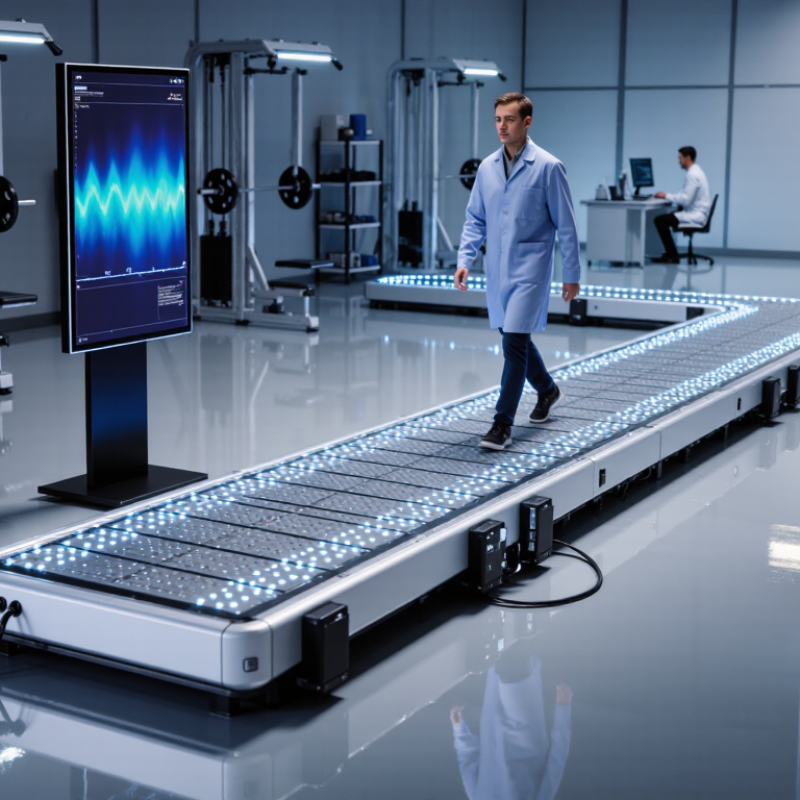
China’s walkway pressure mapping market is expanding across hospitals, rehabilitation centers, sports facilities, and smart flooring projects. A practical supplier review may include ten Chinese manufacturers with different engineering strengths. Buyers should compare sensor density, measurement area, sampling rate, load range, and calibration methods. These metrics affect how clearly a system captures heel strikes, balance shifts, and uneven loading.
Field experience shows that higher sensor density is not always better. It can increase cost, data volume, and maintenance work. Repeatability matters more when clinicians compare weekly gait tests. Useful specifications include spatial resolution below one centimeter, stable readings during repeated walking trials, and software that exports raw data. Check installation time, warranty coverage, technical training, and replacement sensor availability. Some suppliers provide impressive demonstrations, yet their long-term support remains unclear.
Tips: Request a live test with ordinary walking shoes. Ask for calibration records and sample reports. Test the system under slow, fast, and uneven steps. Confirm whether local engineers can solve faults quickly. A reliable manufacturer should explain limitations, not only advertise accuracy. Also inspect data security practices and electrical compliance documents before purchase. Market figures can change quickly, so verify current production capacity, delivery schedules, and after-sales resources directly. A careful evaluation may reveal that the cheapest quotation is not the lowest total cost.
This chart presents commonly published specification ranges for walkway pressure mapping systems used in gait analysis, rehabilitation, sports science, and biomechanical research. The figures are technology benchmarks and do not represent any individual company or brand.
When assessing China’s top walkway pressure mapping system manufacturers, sensor design deserves close attention. A pressure mat is not simply a grid of numbers. Each sensing element must respond consistently under repeated foot strikes, weight shifts, and changing temperatures. During practical gait tests, calibration can influence results as much as the sensor material itself. Small baseline errors may appear as unusual pressure peaks.
A 100 Hz sampling rate records one measurement every 0.01 seconds. This speed can capture heel contact, mid-stance loading, and toe-off with useful timing detail. It is often suitable for walking analysis. Faster sampling may help with rapid movements, but it also creates larger files and higher processing demands. More data is not automatically better.
Spatial resolution requires careful interpretation. A system with five-millimeter sensor spacing may show fine pressure changes, but the effective image can be less detailed after filtering and interpolation. Sensor pitch, active sensing area, and software display should be checked separately. Ask for calibration procedures, repeatability data, and test conditions. Footwear, moisture, and walking speed can alter the measurements. That is easy to underestimate. Some product specifications look impressive until real footsteps expose uneven sensitivity near sensor boundaries. Independent validation remains valuable, although test protocols are not always perfectly comparable.
China Top 10 Walkway Pressure Mapping System Manufacturers
A practical review of China’s top ten walkway pressure mapping system manufacturers should compare products, testing, and application fit. Common product types include portable pressure mats, modular walkways, force plates, sensor arrays, and analysis software. Portable mats suit clinics with limited space. Longer walkways capture several complete gait cycles. Some systems also provide real-time visual feedback.
Manufacturer profiles should explain sensor density, sampling rate, maximum load, calibration method, and software compatibility. These details affect measurement quality. A high sensor count does not always mean better clinical results. Testing should include repeatability, drift, spatial accuracy, cable durability, and overload protection. Calibration records linked to ISO/IEC 17025 laboratories add credibility. Medical-use systems may also follow ISO 13485 quality controls and relevant IEC 60601 safety requirements.
Application sectors vary widely. Hospitals and rehabilitation centers study balance, symmetry, and recovery progress. Sports institutes examine landing pressure and running patterns. Footwear laboratories evaluate insole designs under controlled movement. Universities often need open data formats and research software access. Elder-care facilities may prefer simple interfaces and quick setup. In field testing, uneven floors can distort readings. That issue is easy to overlook. Buyers should request sample reports, live demonstrations, and maintenance terms before comparing prices. Some manufacturers publish limited validation data, so independent testing remains worth considering.
| Profile | Primary Product Type | Sensor and System Configuration | Typical Measurement Parameters | Testing Standards and Validation Methods | Main Application Sectors | Common System Outputs |
|---|---|---|---|---|---|---|
| Manufacturer Profile 01 | Instrumented walkway pressure platform | Embedded capacitive or resistive pressure sensors arranged in modular floor panels; connected to a computer-based acquisition unit. | Peak plantar pressure, pressure-time integral, contact area, stance time, step length, cadence, and left-right loading comparison. | Sensor calibration with traceable reference loads; repeatability testing; gait-test protocols based on documented laboratory procedures. No single universal international standard covers all walkway pressure systems. | Clinical gait laboratories, hospitals, rehabilitation centers, biomechanics research, and university laboratories. | Pressure maps, center-of-pressure trajectories, regional load reports, gait symmetry charts, and exportable time-series data. |
| Manufacturer Profile 02 | Portable pressure-sensitive walkway mat | Flexible sensor matrix integrated into a rollable or semi-portable mat with a dedicated interface and analysis software. | Foot-contact timing, step count, step width, walking velocity, foot progression angle, contact pressure, and temporal symmetry. | Calibration before testing, unloaded-zero checks, repeated walking trials, and comparison against video or motion-capture timing where required. | Outpatient rehabilitation, sports medicine, community mobility screening, and field-based gait assessment. | Color-coded plantar-pressure images, footprint sequencing, temporal-spatial gait parameters, and patient progress reports. |
| Manufacturer Profile 03 | Modular walkway and force-measurement system | Pressure-sensing modules combined with one or more force plates or instrumented sections for kinetic and plantar-load assessment. | Vertical ground-reaction force, center of pressure, plantar pressure distribution, loading rate, braking and propulsion indicators, and gait-cycle timing. | Force-platform calibration procedures commonly reference ISO 10360 principles where applicable to force-measuring equipment; pressure sensors require separate load-cell or reference-weight calibration. | Advanced biomechanics, orthopedics, prosthetics and orthotics, human-performance research, and clinical movement analysis. | Force curves, center-of-pressure paths, pressure-force synchronization, joint-analysis inputs, and comparative trial statistics. |
| Manufacturer Profile 04 | Instrumented treadmill pressure system | Pressure-sensing belt or treadmill deck with continuous sampling during repeated walking or running cycles. | Stance and swing duration, step frequency, peak pressure, pressure-time integral, bilateral symmetry, and speed-dependent loading changes. | Speed verification, belt-alignment checks, sensor linearity testing, repeated-load calibration, and comparison of treadmill results with overground walking. | Gait rehabilitation, endurance and running research, sports performance, neurological assessment, and clinical training. | Continuous pressure heat maps, stride-to-stride trends, asymmetry indices, load distribution graphs, and treadmill-session summaries. |
| Manufacturer Profile 05 | Hybrid walkway and in-shoe pressure measurement system | Walkway platform used with thin in-shoe sensor inserts for simultaneous foot-ground and footwear-interface analysis. | Regional in-shoe pressure, peak force, contact duration, pressure-time integral, foot-strike pattern, and shoe-to-shoe comparison. | Sensor calibration using known loads, footwear-size consistency, sensor placement documentation, repeated-trial reliability testing, and controlled walking speed. | Footwear development, podiatry, diabetic-foot screening, orthotic design, sports science, and occupational ergonomics. | In-shoe pressure maps, footwear comparison reports, high-load-zone identification, and synchronized gait-event markers. |
| Manufacturer Profile 06 | High-resolution plantar-pressure walkway | Dense sensor array designed to capture detailed heel, midfoot, metatarsal, and toe-region pressure patterns. | Maximum pressure, mean pressure, contact area by foot region, regional pressure-time integral, and rollover-pattern analysis. | Grid-uniformity checks, sensor drift monitoring, calibration across the operating range, and regional segmentation validation using anatomical landmarks. | Diabetic-foot risk assessment, podiatry, orthopedic evaluation, custom insole development, and clinical research. | Regional pressure maps, anatomical-zone statistics, high-pressure alerts, side-by-side comparisons, and longitudinal monitoring charts. |
| Manufacturer Profile 07 | Rehabilitation-focused gait analysis walkway | Pressure walkway integrated with video, gait-event detection, or therapist-oriented assessment software. | Walking speed, cadence, step and stride time, step width, stance ratio, pressure asymmetry, and progression over repeated sessions. | Documented patient-test protocols, test-retest reliability analysis, video cross-checking, and standardized footwear and walking-speed conditions. | Stroke rehabilitation, Parkinson’s disease programs, orthopedic recovery, balance assessment, and physiotherapy clinics. | Therapy dashboards, baseline-versus-follow-up reports, symmetry scores, trend lines, and clinician-readable PDF summaries. |
| Manufacturer Profile 08 | Sports and running pressure analysis platform | Rigid walkway or running deck with pressure sensors capable of recording walking, jogging, and running trials. | Foot-strike location, peak pressure, loading rate, contact time, propulsion-zone loading, cadence, and bilateral running differences. | Controlled-speed testing, sensor calibration, repeated-trial consistency checks, and footwear and surface-condition documentation. | Sports performance centers, running clinics, athletic footwear development, coaching, and sports injury prevention. | Running pressure maps, strike-pattern classification, footwear comparisons, load-distribution profiles, and athlete trend reports. |
| Manufacturer Profile 09 | Pediatric and developmental gait walkway | Short or modular walkway configuration adapted for children, with adjustable test protocols and simplified patient interfaces. | Step and stride parameters, walking velocity, foot-contact sequence, pressure distribution, stance duration, and gait symmetry. | Age- and size-appropriate test procedures, repeated measurements, calibration using reference loads, and comparison with clinical observation or video. | Pediatric rehabilitation, developmental gait studies, cerebral-palsy assessment, orthotics, and child mobility research. | Age-appropriate gait reports, footprint sequences, bilateral comparison charts, pressure-region summaries, and session-to-session tracking. |
| Manufacturer Profile 10 | Research-grade walkway with software development interface | Configurable sensor modules with synchronized data acquisition, raw-data export, and integration options for motion capture or electromyography. | Raw pressure values, force estimates, center-of-pressure coordinates, pressure-time curves, gait events, temporal-spatial parameters, and custom variables. | Traceable calibration documentation, sensor linearity and hysteresis testing, sampling-rate verification, synchronization checks, and laboratory-specific validation protocols. | Universities, government research institutes, medical-device development, robotics, ergonomics, and human-movement science. | Raw and processed datasets, application-programming-interface access, synchronized multimodal recordings, custom algorithms, and statistical exports. |
Technical note: Walkway pressure mapping is generally validated through manufacturer calibration procedures, reference-load testing, repeatability studies, and laboratory-specific gait protocols. Standards such as ISO 10360 may be relevant to associated force-measuring equipment, while footwear and clinical testing may use additional sector-specific methods. The applicable standard should always be confirmed for the intended test, device class, and regulatory market.
Comparing China’s top 10 walkway pressure mapping system manufacturers requires more than checking sensor counts. Accuracy should be tested across the full walkway, not only at the center. Look for repeatability within a stated tolerance and clear calibration records. A system that detects heel strike consistently can reveal gait changes that a simple pressure image may miss.
Pressure range also matters. Clinical walking tests may need high sensitivity for light contact, while industrial footwear testing can create much greater loads. A wide range is not automatically better. Important details include sampling speed, spatial resolution, sensor spacing, and overload protection. During evaluation, ask whether readings remain stable after thousands of walking cycles. Durability depends on the sensor surface, cable design, moisture resistance, and ease of replacement. Small connector failures can interrupt an otherwise reliable study.
Software separates practical systems from attractive hardware. Useful platforms should display live pressure maps, center-of-force movement, peak pressure, contact time, and left-right balance. Export options should support common research formats without hiding raw data. Clear reports save time. Some systems offer advanced analysis, but the workflow may feel unnecessarily complicated for routine assessments. Request a trial using several foot sizes and walking speeds. Test subjects should include different body weights, because performance can change under real loading conditions. Calibration guidance, technical support, and documented software updates also indicate whether a manufacturer treats long-term reliability seriously.
For buyers comparing China’s top ten walkway pressure mapping system manufacturers, the specification sheet is only the starting point. The real question is purpose: gait assessment, ergonomic screening, or safety testing. A 2022 WHO report estimates that 1.71 billion people live with musculoskeletal conditions worldwide. That scale makes repeatable measurement more valuable than attractive dashboards. For gait work, check sensing area, spatial resolution, sampling frequency, calibration drift, and left-right synchronization. A longer walkway captures natural acceleration and deceleration. Short platforms can distort the first step.
For ergonomics, ask whether the system records pressure duration, peak load, contact area, and asymmetry. These outputs can evaluate standing tasks, lifting patterns, and workstation changes. NIOSH’s Revised Lifting Equation remains a respected reference, but pressure data cannot replace task analysis. Context matters.
In safety testing, inspect overload protection, sensor replacement, waterproofing, edge transitions, and software audit trails. ISO 9001 certification may support process control, yet it does not prove biomechanical accuracy. Request raw data, calibration records, uncertainty estimates, and repeatability results from independent trials.
Market reports often forecast strong growth in gait-analysis and wearable-sensor technologies, but forecasts are not validation. A 2023 Grand View Research motion analysis report describes expanding demand in healthcare and sports. Treat such figures as direction, not evidence. Compare at least three repeated walks per condition, using consistent footwear and speed. No specification sheet tells the whole story. Choosing the highest sampling rate may increase noise, storage needs, and training costs. Score usability, service response, integration, and operating cost beside sensor performance. Some decisions remain imperfect. Document why.
Common options include portable mats, modular walkways, force plates, sensor arrays, and analysis software.
A portable pressure mat may fit better when storage space is limited.
Review sensor density, sampling rate, maximum load, calibration method, and software compatibility.
Test accuracy across the entire walkway, not only at its center.
Clinical walking may require sensitivity for light contact.
Inspect the sensor surface, cable design, connector strength, moisture resistance, and replacement process.
Useful software can show live pressure maps, center-of-force movement, peak pressure, contact time, and balance.
Request sample reports, live demonstrations, maintenance terms, and a practical trial.
Hospitals and rehabilitation centers study balance, symmetry, and recovery progress.
Ask for calibration records, repeatability results, overload protection details, and documented software updates.
This article provides a practical overview of the Chinese Walkway Pressure Mapping System market, highlighting ten leading manufacturer categories and the key metrics used to evaluate them. It explains how pressure-sensitive sensors, sampling rates of up to 100 Hz, and spatial resolution influence the accuracy of gait and force distribution measurements. It also reviews common product formats, quality-control procedures, testing standards, and application sectors such as biomechanics, rehabilitation, ergonomics, sports science, footwear development, and workplace safety.
A structured comparison focuses on measurement accuracy, pressure range, sensor durability, calibration stability, data-processing software, and reporting capabilities. The buyer’s guide then outlines how to select a suitable system according to testing objectives, including gait analysis, ergonomic assessment, and safety research. Readers will gain a clearer understanding of system specifications, practical performance requirements, and the factors that affect long-term usability, helping them make informed purchasing decisions for laboratory, clinical, industrial, and research environments.

MedTrack