In today’s competitive business landscape, technology plays a crucial role in innovation. One such advancement is 3D Body Motion Capture Analysis. This technology enables precise tracking of human movement. It offers valuable insights for various industries like sports, entertainment, and healthcare.
By analyzing body motion, businesses can enhance performance and reduce injury risks. Athletes can optimize their techniques using real-time feedback. In rehabilitation settings, this analysis aids physiotherapists in crafting personalized treatment plans. However, the implementation of this technology can be challenging. It requires expert knowledge and significant initial investment.
Despite these hurdles, the benefits of 3D Body Motion Capture Analysis are profound. Companies that embrace this technology gain a competitive edge. They can improve efficiency and foster innovation in their operations. As businesses navigate this technological evolution, the importance of informed decision-making cannot be overlooked.
Understanding 3D Body Motion Capture Technology and Its Applications
3D body motion capture technology offers transformative possibilities for various industries. This technology records the movements of a person with precision, creating a digital model of their motion. By using a network of cameras and sensors, even subtle movements can be captured. Such granular data provides businesses with insights that traditional analysis methods typically miss.
In fields like sports, healthcare, and animation, the applications are vast. Athletes benefit from detailed movement analysis for performance improvement. Physical therapists utilize this data to tailor rehabilitation programs. In the entertainment sector, animators create lifelike characters by studying real movement.
Despite its advantages, challenges remain, such as high setup costs and the complexity of data interpretation. Users must also reflect on how to integrate these insights effectively into their existing processes. Results may vary, and not all motion capture applications will yield immediate success. Each business must assess the long-term benefits against their specific needs and capabilities.
Enhancing Product Design and Development through Motion Analysis
3D body motion capture analysis offers transformative benefits for product design and development. By capturing real-time movements, companies can create more ergonomic and user-friendly products. A report by the International Society of Biomechanics highlights that 40% of product failures stem from poor design choices. Incorporating motion analysis helps mitigate this risk. It allows designers to visualize how users interact with products, leading to enhanced functionality and comfort.
Moreover, this technology can save businesses time and resources. According to a study from the Journal of Industrial Technology, companies using motion capture can reduce prototyping time by up to 30%. This rapid iteration process enables designers to test multiple concepts quickly. However, not all teams are trained to interpret motion data effectively. This gap can hinder the benefits of motion analysis.
Incorporating motion analysis also requires investment in technology and training. Some firms may struggle with this upfront cost. While the potential for innovation is significant, companies must consider their unique circumstances. A thoughtful approach ensures that 3D motion capture becomes a valuable tool in product development, rather than an underutilized resource.
Improving Sports Performance and Athlete Training Using Motion Capture
3D body motion capture analysis is revolutionizing athlete training. This technology captures precise movement data, helping coaches improve performance. It provides clear visuals of how athletes move, revealing strengths and weaknesses. With accurate feedback, athletes can refine their techniques effectively.
During training sessions, 3D motion capture tracks every subtle adjustment. This detailed analysis can uncover inefficient movements that might go unnoticed. Athletes may find themselves relying on outdated training methods that don't align with their physical capabilities. Having data to analyze helps address these issues, enabling tailored training regimens.
However, technology alone isn't a silver bullet. Coaches must interpret data to create actionable strategies. Over-relying on metrics can sometimes hinder instinctual performance. Balancing data insights and natural abilities is crucial. In this field, continuous adaptation and reflection on training methods are necessary for optimal athlete development.
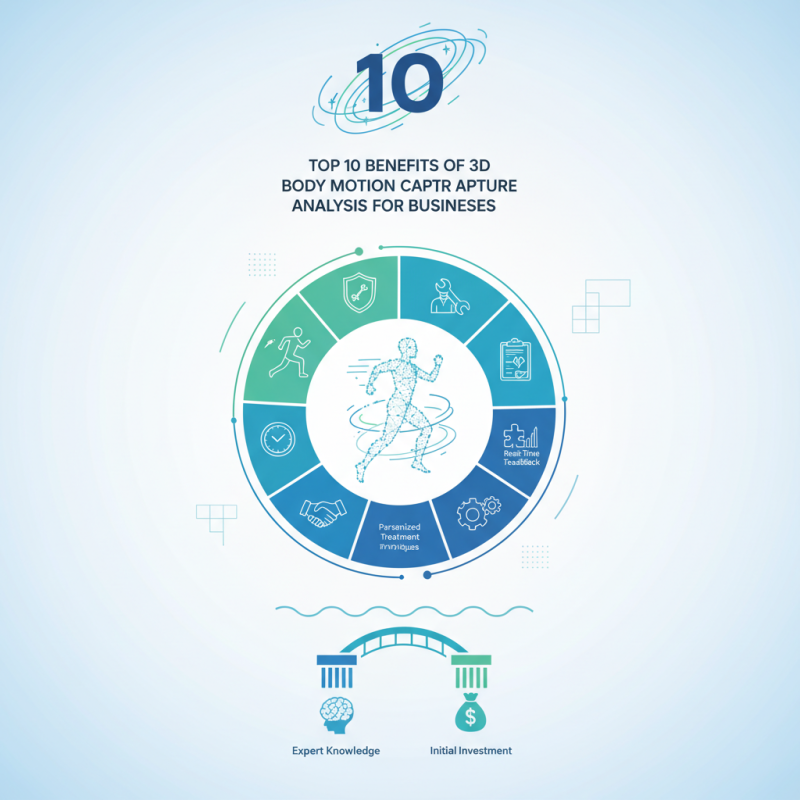
Top 10 Benefits of 3D Body Motion Capture Analysis for Businesses
Streamlining Ergonomics and Workplace Safety with Motion Analysis
In today's dynamic work environment, ergonomics and workplace safety are more crucial than ever. 3D body motion capture analysis offers innovative solutions for companies striving to enhance these aspects. By analyzing movements in real-time, businesses can identify potentially harmful postures and repetitive motions that may lead to injuries. Observing employees in their natural work settings provides insights into how they interact with their equipment.
This technology isn't just about eliminating risks; it's about fostering a culture of well-being. Captured data can reveal patterns in movement that indicate inefficiencies. For instance, if workers frequently reach awkwardly, minor adjustments could lead to significant improvements. Yet, adopting such technology isn't without its challenges. Implementation may require significant training and adjustment period for employees, which can be daunting. Understanding these hurdles is vital for successful integration into any workplace.
Moreover, while 3D motion capture can pinpoint areas for improvement, it also raises questions about privacy. Employees may feel uncomfortable being continuously monitored, raising the need for transparent communication. Balancing safety with personal comfort is an ongoing challenge. Addressing these concerns thoughtfully is essential for maximizing the benefits of motion analysis in the workplace.
Top 10 Benefits of 3D Body Motion Capture Analysis for Businesses
| Benefit |
Description |
Impact on Business |
| Enhanced Ergonomics |
Utilizes motion capture data to analyze and improve body posture. |
Reduces repetitive strain injuries, leading to lower healthcare costs. |
| Increased Productivity |
Identifies inefficiencies in movement, allowing employees to work more effectively. |
Boosts overall productivity, positively affecting bottom line. |
| Improved Training Programs |
Analyzes employee motion to develop tailored training techniques. |
Enhances skill acquisition and performance longevity. |
| Data-Driven Decision Making |
Utilizes quantitative data to inform management strategies. |
Enables informed decisions that lead to continuous improvement. |
| Behavioral Analysis |
Captures detailed insights into employee movements and behaviors. |
Informs HR policies and employee satisfaction strategies. |
| Safety Compliance |
Monitors movements to ensure compliance with safety regulations. |
Minimizes workplace accidents and associated liabilities. |
| ROI on Training |
Tracks improvements post-training interventions. |
Demonstrates clear financial benefits from training efforts. |
| Employee Engagement |
Engages employees through personalized insights on their movements. |
Increases motivation and commitment to organizational objectives. |
| Cultural Benefits |
Builds a culture focused on health and well-being. |
Enhances organizational reputation and attracts talent. |
| Competitive Advantage |
Utilizes cutting-edge technology to stay ahead in the market. |
Differentiates the organization in a crowded industry. |
Increasing Customer Engagement and Marketing Strategies via Motion Insights
3D body motion capture analysis is revolutionizing how businesses engage with clients. By capturing precise movements, companies can analyze customer behavior more deeply than ever. This technology provides valuable insights that drive tailored marketing strategies.
According to a recent industry report, businesses that incorporate motion analysis have seen a 30% increase in customer interactions. This data highlights the tangible benefits of embracing innovative techniques.
Utilizing motion capture allows for the creation of personalized experiences. For example, consumers can interact with products through augmented reality using their own movements. This immersive experience captivates users. But, the success of such strategies depends on understanding the target audience. A misalignment could lead to wasted resources and ineffective campaigns. Companies must continually analyze the data to refine their approaches.
Moreover, businesses should not overlook the potential for feedback. The analysis can reveal both strengths and weaknesses in marketing efforts. By evaluating motion data, firms can adapt their strategies accordingly. Acknowledging that not every campaign will resonate leads to better outcomes. A cautious approach ensures growth and improvement over time. Keeping customer engagement at the forefront is essential for sustained success in marketing.
Conclusion
3D Body Motion Capture Analysis is revolutionizing various industries by providing valuable insights into human movement. This technology enhances product design and development by allowing businesses to analyze how consumers interact with products, leading to more user-friendly designs. In the sports sector, it optimizes athlete training and performance through detailed motion analysis, enabling tailored coaching strategies that can significantly improve outcomes.
Furthermore, 3D Body Motion Capture Analysis plays a crucial role in ergonomics and workplace safety by identifying potential hazards and facilitating better workspace designs, which promote employee well-being. Lastly, it aids in increasing customer engagement and refining marketing strategies by delivering motion insights that resonate with target audiences. Overall, the integration of this advanced analysis technique yields numerous benefits that can drive innovation and efficiency across various business sectors.

 MedTrack